

Beyond Our Products
Cell Biology Solution
Simulated Microgravity Platform
YURI GmbH – RPM 2.0
(Random Positioning Machine)
Designed for 3D cell culture and simulated microgravity research, YURI RPM 2.0 is a Random Positioning Machine platform built on 20 years of technology proven by Airbus. It brings the microgravity of space into your ground-based laboratory.
- 10-3g ~ 0.9g
Gravity Range
- 60 +
Research Groups Worldwide
- 70% +
Share of RPM Publications
- 20+ Years
Proven Track Record
Product Overview
Space-Like Microgravity, Recreated in Your Lab
YURI RPM 2.0 uses two independent gimbal frames to randomly reorient the gravity vector, exposing biological samples to a continuous simulated microgravity environment. This next-generation platform precisely simulates both microgravity
(10-3 g)and partial gravity up to ~0.9 g.
RPM 2.0 builds on more than 20 years of technology originally developed by Airbus Defence and Space Netherlands for ESA, which YURI now owns and continues to advance. It is used by more than 60 research groups worldwide, including NASA and ESA.
Key Features
-
Pole-Bias Prevention Algorithm

A proprietary path algorithm prevents pole bias, ensuring a uniform microgravity environment.
-
Dedicated Control Software

PC-based software for real-time monitoring and control of parameters such as mean g-value.
-
Full Incubator Compatibility

Runs directly inside temperature-, CO₂- and humidity-controlled incubators — no facility modifications required.
-
Radiation Facility Compatible

Operates in radiation facilities, making it ideal for combined-stressor research.
-
Integrated Interface

Power and communications are combined in a single interface for easy installation and operation.
-
ISS Experiment Continuity

Serves as a platform for pre-flight validation and post-flight analysis of International Space Station experiments.
Specifications
| Gravity Simulation | |
|---|---|
| Simulation range | 10-3g ~ 0.9g |
| Pole Bias | Proprietary path algorithm |
| Operating Environment | |
| Incubator compatible | temperature / CO₂ / humidity-controlled environments |
| Radiation facilities | Supported |
| Continuous operation | 24/7 |
| Software & Interface | |
| Control software | Dedicated PC software included |
| Monitoring | Real-time parameter monitoring |
| Connectivity | Integrated power + communications |
| References | |
| Key users | NASA, ESA and 60+ research groups worldwide |
| Track record | 20+ years (Airbus heritage) |
Applications
-
Cell Biology
3D cell culture, spheroid formation, and the mechanisms of cell differentiation and growth
-
Cancer Research

3D growth and metastasis models of breast, prostate and thyroid cancer cells
-
Regenerative Medicine & Tissue Engineering

Bone cell and cartilage tissue engineering, osteoporosis modeling and stem cell differentiation
-
Plant Biology

Gravisensing mechanisms, growth orientation and fundamental research for space agriculture
Operation
Video

Biosera Serum Reliable Serum Solutions for Cell Culture Research
With a vertically integrated production system that manages every step from blood collection to final filling, Biosera delivers the quality consistency, full traceability and secure supply that cell culture research demands. Backed by rigorous quality and safety controls, Biosera offers a wide range of animal sera, cell culture media and custom services. Its products are trusted everywhere from reproducibility-critical research to large-scale processes such as vaccine production.
Key Strengths
-

Full Traceability Through Vertical Integration
Biosera manages the entire production chain, from source-animal selection to final filling. Every batch is backed by traceable records, so any quality issue can be identified and resolved quickly.
-

Engineered for Batch-to-Batch Consistency
Large-scale pooling minimizes animal-to-animal variation, keeping results reproducible even when batches change — ideal for long-term studies, repeated experiments and stability-critical processes such as vaccine production.
-

Rigorous Quality Control
Key quality parameters such as endotoxin and hemoglobin are tightly controlled, and final products undergo multi-step sterile filtration.
-

Safety & Regulatory Compliance
A safety-focused system includes BSE controls, viral safety measures, gamma irradiation and origin-specific quality management. GMP-compliant production and customizable testing protocols meet both research and manufacturing needs.
Products & Services
Key Applications
- Cell Line Culture & Maintenance : established cell lines, primary cells and stem cells
- Cell-Based Assays : cytotoxicity, drug-response and other reproducibility-critical experiments
- Bioprocess Research : cell culture for protein and antibody production
- Vaccine Production : large-scale cell culture processes, including veterinary vaccines
A Broad Portfolio with Tailored Support
Biosera offers a broad range of animal sera, Powdered Cell Culture Media and custom formulation services. Its GMP-compliant manufacturing delivers solutions matched to each customer’s production goals and research environment. Beyond product supply, Biosera provides partner-level service that considers quality, process and end use.
-
1Bovine Serum
- Fetal Bovine Serum (FBS)
- Newborn Calf Serum
- Calf Serum
- Adult Bovine Serum
-
2Other Animal Sera
- Rabbit Serum
- Horse Serum
- Porcine Serum
- Ovine / Chicken Serum and more
-
3Media & Buffers
- Powdered Cell Culture Media
- Buffers
Complementary cell culture products for use with serum
-
4Custom Services
- Customized Formulation
- Flexible Test Protocols
- Technical Support
- Stable Supply Support
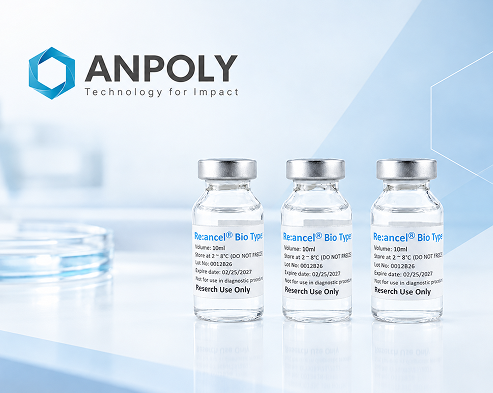
Plant-based New Biomaterial for Advanced 3D Cell Culture
ANPOLY – Re:ancel Bio
(Plant-derived nanocellulose ECM)
Re:ancel Bio is a next-generation extracellular matrix (ECM) material based on plant-derived nanocellulose, which provides a stable environment for three-dimensional cell culture and organoid research, characterized by high uniformity and reproducibility. It is a sustainable, non-animal-derived culture substrate designed for drug efficacy assessment, toxicity testing and regenerative medicine research.
- 0.5 ~ 0.3%
Depending on the type of cells used, it can be diluted to between 0.5 ~ 0.3% before use.
- 15 ~ 20% ↑
15–20% greater cell growth than conventional products
- Xeno-Free
Plant-derived materials · Consistent quality across batches
Product Overview
Next-generation extracellular matrix based on plant-derived nanocellulose
ANPOLY is a high-tech materials platform company that develops and commercializes eco-friendly, high-performance materials derived from plant-based nanocellulose. Re:ancel Bio is a next-generation extracellular matrix that ensures high uniformity and reproducibility while reducing immune responses, providing a stable cell culture environment. Engineered for three-dimensional cell culture and organoid research, it supports reliable drug testing and regenerative medicine applications, establishing a new standard in molecular cell biology as a sustainable bio-product.
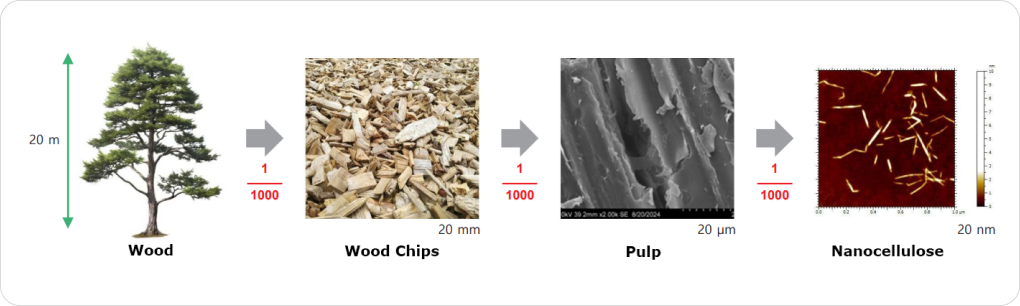
What is CNF?
CNF (Cellulose NanoFiber) is a new eco-friendly fiber made by breaking down cellulose from trees or plants into nanoscale fibers. CNF is extremely strong while weighing only one-fifth as much as steel and offers unique advantages such as transparency, biodegradability, and high thermal stability, making it a promising next-generation material. ANPOLY has proprietary technology to produce nanocellulose from wood pulp, rice husks, and coffee grounds, and has developed and commercialized secondary battery binders, separators, biocomposites, and ECMs using this nanocellulose.
Key Features
Key Functions and Features
Similarities with existing ECMs
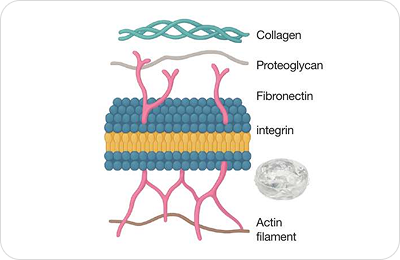
Re:ancel Bio is a non-animal-derived alternative to conventional ECM materials, reproducing key ECM properties such as high water content and three-dimensional fibrous structures that promote stable cell proliferation and organization. Unlike animal-derived products, Re:ancel Bio ensures minimal batch-to-batch variation and delivers 15~20% greater cell growth potential in culture compared to conventional products. Drug efficacy and toxicity tests based on this material have also demonstrated outstanding performance.
How to Use
Instructions for use
Dilute the 1% Re:ancel Bio® concentrate according to the type of cells being cultured. You can easily start 3D cell culture using the 4-step protocol below.
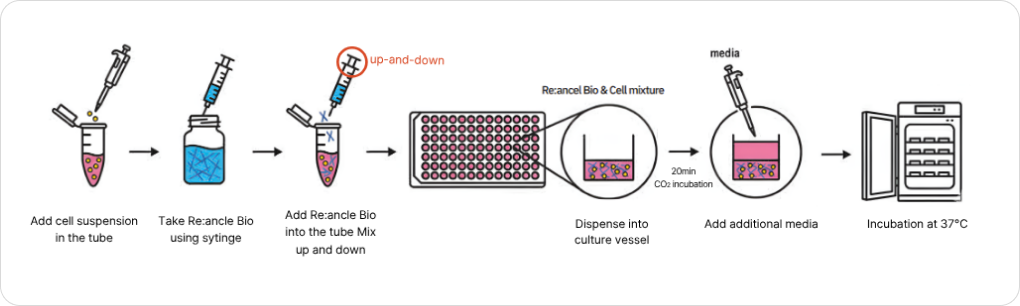
- The 1% Re:ancel Bio is diluted in the cell culture medium to 0.5 ~ 0.3%, depending on the cell type
- Count the desired number of cells, then mix them with Re:ancel Bio and seed them onto a plate
- After dispensing Re:ancel Bio mixed with cells into the plates, stabilize the samples in a 37 °C incubator for 20~30 min
- After stabilization, add the same volume of culture medium and incubate. into the prepared plates, and cell culture medium was added before incubation
Performance Data
Cell Viability
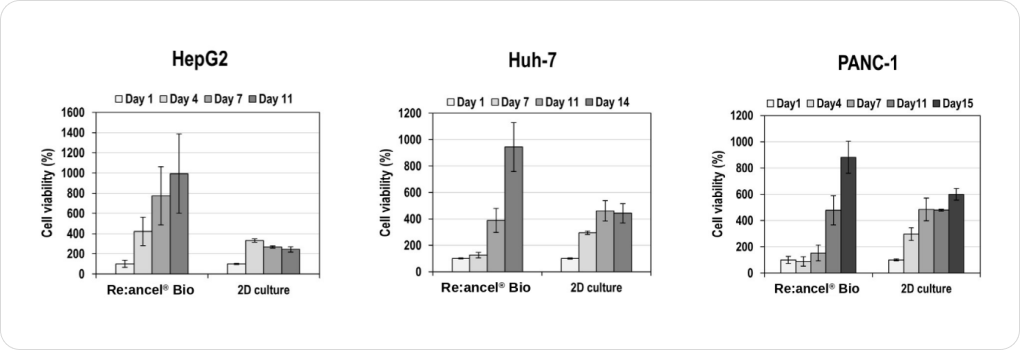
- After 3D culture of HepG2, Huh-7, and PANC-1 cell lines in 0.5% Re:ancel Bio, cell viability was comparatively evaluated against 2D culture over the culture period
- Cell viability was measured using the CellTiter-Glo 3D Cell Viability Assay
- Higher cell viability in 3D cell culture based on Re:ancel Bio was observed compared to 2D cell culture
Cell Morphology Image
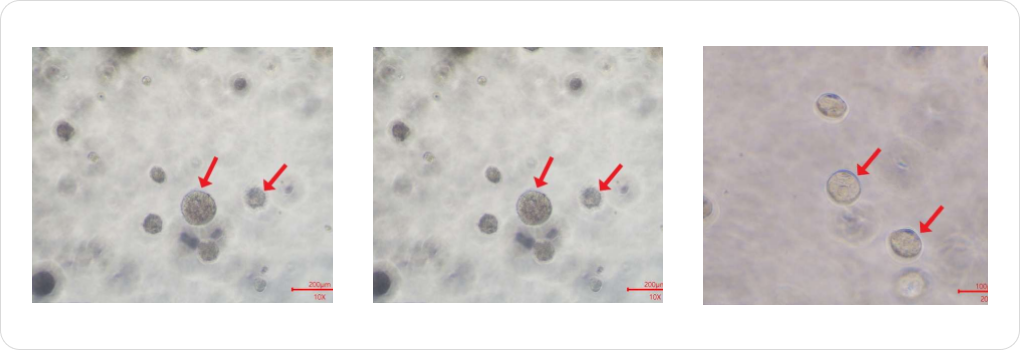
- Cell morphology images of HepG2, Huh-7, and PANC-1 cell lines cultured in 0.5% Re:ancel Bio were captured
- The cells were observed on day 7 of incubation using an inverted microscope (Zeiss Axio Vert A1)
- The round-shaped spheroid forms a three-dimensional spherical aggregate
Attenuated Sensitivity to Sorafenib in 3D Hepatocyte Culture
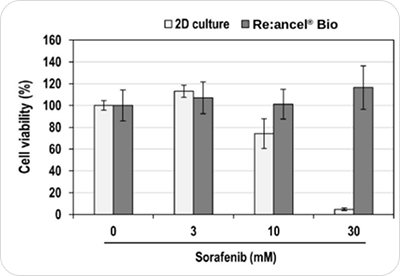
- Drug responses were evaluated in 2D HepG2 cultures and in Re:ancel Bio-based 3D models
- Cell viability was measured on day 5 of culture following treatment with varying concentrations of Sorafenib
- In 3D Re:ancel Bio cultures, resistance patterns resembled those observed in vivo, likely due to limited drug infiltration
Comparison with Competing Products
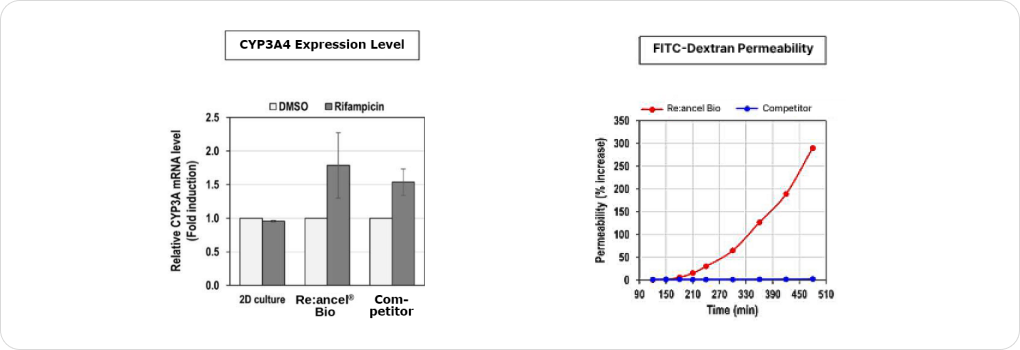
- Comparison with competing products (animal derived ECM)
- Expression of CYP3A4HepG2 cells were treated with Rifampicin to induce CYP3A4 expression. Real-time PCR analysis was conducted to assess expression and evaluate equivalence with competitor products.
- Permeability of FITC-DextranIn the Transwell system, FITC-Dextran was treated in the upper chamber. Permeability to the lower chamber was measured over time to evaluate performance relative to other products
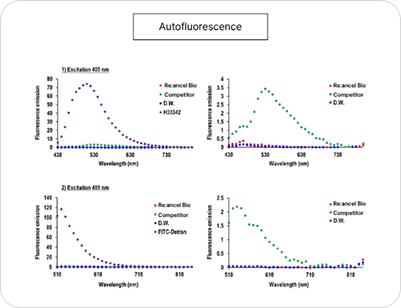
- AutofluorescenceRe:ancel Bio shows no intrinsic autofluorescence, with emission levels at the commonly used excitation wavelengths of 405 nm and 488 nm comparable with those of distilled water, the negative control. In contrast, competitor’s product exhibited fluorescence patterns similar to the positive controls, Hoechst 33342 and FITC–dextran. This low background signal of Re:ancel Bio enables clearer fluorescence imaging and more reliable analysis, thereby making it an ideal scaffold for advanced 3D cell culture and precise drug evaluation.
Applications
Key areas of applied research
-
3D Cell Culture

An extracellular matrix optimized for 3D cell culture, providing a stable environment for cell growth.
-
Organoid
Optimized for organoid research, it supports the development of reliable 3D models.
-
Drug Efficacy & Toxicity Assessment

Enables reliable drug efficacy testing and toxicity assessment.
-
Regenerative Medicine
Supports regenerative medicine research using sustainable biomaterials.